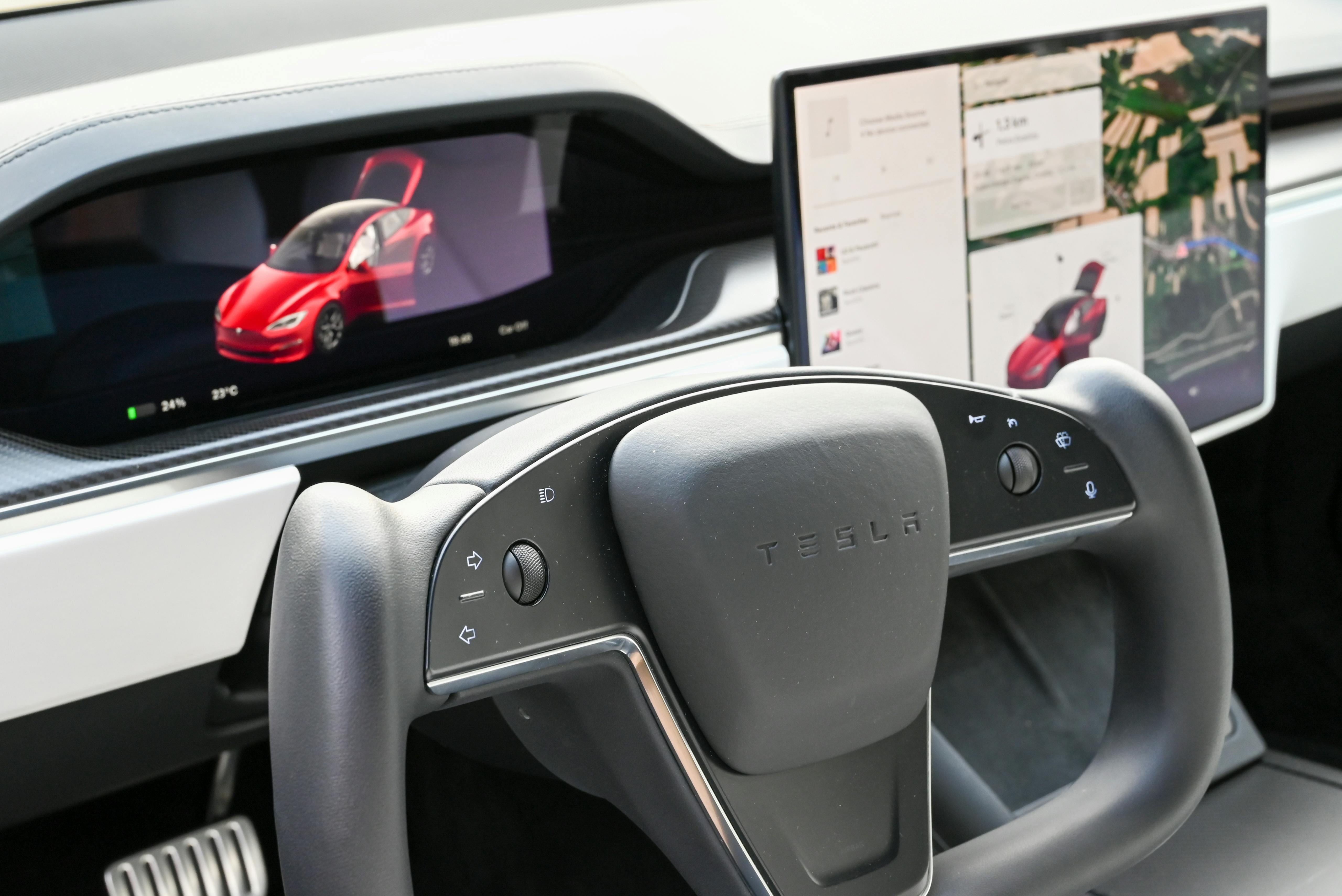

There’s a quiet revolution happening on our roads — and most people don’t even realise it’s already started.
Cars today are less mechanical machines and more rolling computers. They learn your habits, warn you before accidents happen, charge themselves wirelessly, and in some cases, drive themselves. If you bought a car five years ago, it already feels like a different era.
So what comes next? And which car technology trends should you actually pay attention to — whether you’re a driver, a buyer, or simply someone curious about where all this is heading?
Let’s break it all down.
The Big Picture: Why Car Tech Is Moving Faster Than Ever
It’s not just one breakthrough driving change. It’s a collision of several forces happening at once.
Stricter environmental regulations. Advances in artificial intelligence. Shifting consumer expectations. And a global semiconductor industry that’s become the invisible backbone of every modern vehicle. The result? An industry experiencing what analysts at ITONICS describe as its most fundamental restructuring in a century — not just incremental improvements, but a complete rethink of what a car is, how it works, and who builds it.
Here are the trends at the centre of that transformation.
1. AI and the Rise of the “Thinking” Car
Artificial intelligence has quietly become the most important ingredient in modern vehicles.
It’s no longer just about self-parking or voice assistants that half-work. Today’s AI systems process data from dozens of sensors simultaneously, predicting hazards before they become accidents, adjusting driving behaviour to conditions in real time, and personalising the cabin experience based on who’s behind the wheel.
Mercedes-Benz’s MBUX system, for example, learns driver habits and can anticipate preferences — from music and climate to route suggestions — without being asked.
What’s changed in 2025–2026 is the sophistication. At CES 2026, automakers like Honda, Mercedes-Benz, and Volkswagen announced the integration of large language models (LLMs) into their vehicles. These aren’t just voice commands anymore. They’re context-aware co-pilots capable of managing energy, answering complex queries, and guiding maintenance decisions — conversationally.
Qualcomm’s Snapdragon platform is positioning itself as the central chip powering this in-vehicle intelligence, supporting scalable autonomy from Level 1 through Level 3 in a single architecture. In short, the car is becoming less of a product and more of a platform.
2. Autonomous Driving: Closer Than You Think (But Not Without Caveats)
Self-driving cars have been “five years away” for over a decade. But something genuinely shifted in 2025.
Level 3 autonomy — where the driver can legally take their hands off the wheel under specific conditions — reached commercial deployment by several major manufacturers. Level 4 testing (full autonomy in defined zones) is active in cities across China, the US, and parts of Europe.
Companies like Waymo and Rivian are expanding robotaxi services, while Tesla continues pushing its Full Self-Driving software updates over-the-air to existing vehicles. That said, it’s worth being honest about where the challenges still sit:
- Regulatory frameworks vary wildly by country — what’s legal in California may not be permitted in the UK
- Infrastructure readiness is uneven; rural roads and unpredictable weather still pose serious challenges
- Public trust remains a significant barrier, particularly after high-profile incidents
The trajectory is clear. But “fully autonomous everywhere” is still a destination, not a current stop.
3. Electric Vehicles: Not Slowing Down, But Maturing
The EV story in 2026 is more nuanced than headlines suggest.
Yes, pure battery electric vehicle (BEV) sales growth has softened in some markets. But that’s not a retreat — it’s a market maturing. Deloitte’s 2025 Global Automotive Consumer Study found that while EV interest remains moderate in many regions, demand for hybrids and range extenders is rising sharply.
Buyers aren’t abandoning electric. They’re being more practical about it.
The real battleground has shifted to three areas:
- Battery technology — Solid-state batteries moved significantly closer to production in 2025. They offer higher energy density, faster charging, and improved safety compared to current lithium-ion packs.
- Charging infrastructure — The next leap isn’t just longer range. It’s making the charging experience feel as seamless as filling up with petrol once did. Mercedes-Benz’s new electric GLC, unveiled at CES 2026, claims an 800-volt charging system and over 700km of range.
- Price parity — Analysts at ITONICS note that EV manufacturers must reach cost parity with petrol vehicles without subsidies for mass adoption to accelerate properly.
For UK drivers specifically, government targets and expanding charge point networks are pushing this faster than many realise.
4. Software-Defined Vehicles: Your Car Gets Updates Like Your Phone
This might be the most underrated shift in modern automotive history.
A software-defined vehicle (SDV) separates the car’s value from its hardware. Instead of buying features baked into the metal, you’re buying a platform that can be improved, unlocked, or upgraded over time — remotely, via over-the-air (OTA) updates.
Tesla popularised this. Now everyone is following. At CES 2026, Bosch showcased AI-driven cockpit systems and by-wire technologies — replacing traditional mechanical steering and braking connections with electronic controls. Elektrobit demonstrated modular Linux-based SDV platforms that shorten development cycles and allow the same software stack to work across multiple vehicle models.
What this means for you as a driver: The car you buy today could be meaningfully better in two years without any visit to a dealership. New safety features, improved range, better UI — all pushed to your car while it sits in the driveway overnight.
What it means for manufacturers: software margins can offset declining service revenue, making it a commercially essential shift, not just a nice-to-have.
5. Connected Cars and V2X Technology
The car of the future doesn’t just communicate with the driver — it communicates with everything around it.
Vehicle-to-everything (V2X) technology allows cars to exchange data with:
- Other vehicles (V2V)
- Road infrastructure, like traffic lights (V2I)
- Pedestrians and cyclists (V2P)
- The wider network (V2N)
The potential safety impact is enormous. A car that “knows” a lorry has braked sharply 400 metres ahead — before it’s visible — can respond far faster than any human. Cities piloting V2X infrastructure have reported measurable reductions in intersection accidents in early trials.
At CES 2026, connectivity themes included satellite links, hybrid networks, and edge computing — processing data directly on the vehicle rather than relying entirely on cloud connectivity. This matters for reliability in areas with poor signal, and for reducing latency in safety-critical situations. 5G integration is accelerating this. The combination of low-latency 5G and onboard edge computing gives connected cars the processing power to act on real-world data in milliseconds.
6. Advanced Driver Assistance Systems (ADAS): Now the Baseline
Five years ago, features like automatic emergency braking and lane-keeping assist were premium add-ons. Today, they’re standard across most new vehicle ranges. ADAS has moved from the luxury showroom to the family hatchback — and the sophistication has followed.
Modern ADAS Features in 2026 Explained
| Feature | What It Does |
|---|---|
| Modern ADAS Systems in 2026 | Modern ADAS systems in 2026 include: |
| Adaptive Cruise Control | Maintains a safe following distance automatically |
| Lane Centring | Keeps the vehicle centred without driver input |
| Blind-Spot Monitoring | Alerts when vehicles are in your blind spot |
| Automatic Emergency Braking | Applies brakes when a collision is imminent |
| Driver Monitoring Systems | Detects fatigue and distraction using in-cabin cameras |
| Alcohol Detection | Real-time in-cabin alcohol sensing (now entering production vehicles) |
Smart Eye, a leader in in-cabin intelligence, showcased real-time alcohol detection at CES 2026 — running on a single electronic control unit. This kind of multi-function safety integration is the direction the whole industry is heading.
Insurance companies are taking notice, too. Premiums for vehicles with advanced safety systems are increasingly being discounted, creating a direct financial incentive for buyers.
7. Cybersecurity: The Threat Nobody Talks About Enough
Here’s the uncomfortable side of all this connectivity: a more connected car is a more hackable car.
As vehicles become software-defined and network-dependent, cybersecurity has become a genuine priority — not just for manufacturers but for regulators too. The EU’s UNECE WP.29 regulations now require all new vehicle types to have certified cybersecurity management systems. The risks are real. Researchers have demonstrated remote access to vehicle controls. Fleet management systems have been targeted. And as cars store more personal data — routes, biometrics, payment information — the stakes keep rising.
Leading automakers are investing heavily here. Qualcomm, for instance, integrates security protocols directly into its automotive chip architecture. And connected car platforms increasingly rely on zero-trust security models — where no component automatically trusts another, even within the same vehicle. It’s not the most exciting car technology trend. But it might be the most important one to get right.
Real-World Example: How These Trends Come Together
Consider the 2026 Mercedes-Benz electric GLC. In a single vehicle, you see nearly every trend above converging:
- 800-volt fast charging and 713km claimed range (EV evolution)
- AI-powered voice assistant with energy management and LLM integration (AI)
- MB.DRIVE ASSIST PRO — a Level 2+ autonomous system for complex urban environments using 30 sensors (ADAS + autonomy)
- OTA updates for ongoing software improvements (SDV)
- Onboard cybersecurity management (connected car security)
This isn’t a concept car. It’s in production. This is what the market leader looks like in 2026 — and it tells you a great deal about where even mid-range vehicles will be within three to five years.
Risks and Challenges Worth Knowing About
It would be dishonest to write about car technology trends without acknowledging the friction points:
- Cost: Advanced tech still adds to sticker prices. Not every driver can afford Level 2 autonomy or premium ADAS.
- Charging infrastructure gaps: Especially in rural UK, reliable charging remains inconsistent.
- Supply chain pressure: Semiconductor shortages of recent years haven’t fully resolved. Complex modern vehicles are vulnerable to component disruptions.
- Data privacy: Highly connected cars collect enormous amounts of personal data. Regulation is still catching up.
- Skills gap: Technicians trained on combustion engines are not automatically equipped to service software-defined EVs.
None of these is a dealbreaker. But they’re real — and worth weighing against the genuine excitement.
FAQs
Q: What is the most important car technology trend right now?
Arguably, the shift toward software-defined vehicles is the most structurally significant. It changes the entire economics of car ownership and manufacturing. AI integration runs a close second — it underpins everything from safety systems to the driving experience itself.
Q: Are autonomous cars safe?
Level 2 and Level 3 systems have shown meaningful safety improvements in controlled studies. However, full autonomy in all conditions is not yet achievable. Current systems work best in predictable environments and still require driver attention and readiness. Always check your vehicle’s specific capability levels.
Q: Will EVs completely replace petrol cars in the UK?
The UK government’s phase-out date for new petrol and diesel car sales is set for 2035. Hybrids are likely to fill the gap during transition. Full replacement across the entire fleet will take considerably longer — the average car on UK roads is over nine years old.
Q: What is V2X technology, and why does it matter?
V2X (Vehicle-to-Everything) allows your car to communicate with other vehicles, traffic signals, and road infrastructure in real time. It can warn you of hazards before they’re visible and forms the backbone of truly intelligent traffic management. Think of it as your car gaining situational awareness beyond what its own sensors can see.
Q: How do over-the-air updates improve my car?
OTA updates push new software to your vehicle remotely, similar to how your phone receives updates. They can add new features, improve existing systems, fix bugs, and enhance safety performance — all without visiting a dealership. Tesla pioneered this; now virtually every major manufacturer offers it.
Q: Is cybersecurity a real concern for modern cars?
Yes. Researchers have demonstrated remote access exploits on connected vehicles. Regulatory requirements like UNECE WP.29 now mandate cybersecurity systems for new vehicles. As a driver, keeping vehicle software updated is one of the best protections — much like keeping your phone’s OS current.
The Road Ahead
The car technology trends shaping driving today are not science fiction. They’re already sitting on dealership forecourts, being pushed to existing vehicles overnight, and being tested on public roads around the world. Whether you’re buying a new car, working in the industry, or just fascinated by where this is all going, the direction is unmistakable. Cars are becoming intelligent, connected, electric, and increasingly autonomous.
The transition won’t be instant, and it won’t be without friction. But the destination is clear. Want to stay ahead of what’s coming? Explore more of our technology and motoring guides at EverTopic — and make sure you’re making informed decisions, not just following the hype.